Healing Music Enterprises Blog

Tune Your Life with Music

Healing Music Enterprises Blog header image 1

Your brain on Christmas music

December 25th, 2009 · Music and the Brain

If you love Christmas music (like I do!) then Christmas music probably makes your brain light up and makes your face smile, your feet dance and your endorphins flow. Why? Because any music that we have positive associations with, that brings back positive memories or that energizes us, is clearly having a positive effect on the brain:

To that I would add, music that has lots of high, percussive sounds such as tambourines, small bells and brass instruments moving with a fast harmonic rhythm are also apt to stimulate the brain in a positive, energizing, endorphin-producing way!

I hope that you’ve heard lots of your favorite Christmas music this season! Happy Holidays! Alice

→ No CommentsTags: ··

Music during surgery: experts weigh in

December 24th, 2009 · Music and Surgery

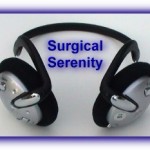
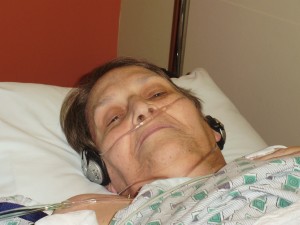
Patient wearing Surgical Serenity Headphones“We trust that the magic of sound, scientifically applied, will contribute in ever greater measure to the relief of human suffering, to a higher development and a richer integration of the human personality, to the harmonious synthesis of all human “notes” of all “group chords and melodies” – until there will be the greater symphony of the One Humanity.”

Roberto Assagioli M.D.

Music can be employed as assistance in obtaining physical, emotional and spiritual health. During the first half of the nineties, I investigated the therapeutic consequences of distinct types of music on patients under adequate anaesthesia. This investigation was done in Johannesburg at the Garden City Clinic, over a period of four years (1991-1995), with statistics done at the Witwatersrand university, by dr. Jackie Galpin.

Data available on investigations done to test the therapeutic benefits of music, would fill a library of its own. That was not what was done. The effect of music with a known therapeutic value, was investigated on patients under adequate anaesthesia – testing for reduction in pain levels and a shorter recovery period. It is an accepted dictum in psychology that people in a deep sleep, coma or under anaesthesia can hear (not remember). That the auditory pathways up to the auditory cortex actually remain open and untouched by anaesthesia. That you can talk to people in a coma or undergoing surgery, and that the body would respond to whatever was said. In many hospitals, positive suggestions are given to patients in a coma and on the operating table. The capital aim of the project was to test music to serve as a credible alternative for the positive verbal suggestions.

Music has powerful effects on people, whether they are educated in music or not. Wertheim (1961) states that “muscle perception and performance is an inborn capacity of the human brain. This ability is common among human beings and is independent of education or culture…..” This makes the application of music as a therapy, or music as an aid to any other therapy, very simple.

Science, Medicine and Anthropology have completed many years of investigation on the effect of music on the physical body. As early as 1830, articles were published by J. Dogiel, which outlined experiments done to affirm music’s dynamic effect on the body. Absolute physiological reactions were established, and amongst other things, it was proved that music act on the circulation of blood, and can cause blood pressure to rise and fall. According to this, these alternations of pressure rely mainly on the influence which auditory stimulation has on the medulla oblongata and the auditory nerve.

During the first half of the previous century, many investigators throughout Europe agreed that music increases metabolism in a very adequate way, and that it changes muscular energy and enhances respiration.

The positive effects of music on physical and psychological health are truly widespread. In an article on music as cause of disease and healing agent, Assagioli (1965) states that “through its influence upon the subconscious, music can have a still more definite and specific healing effect of a psychoanalytic character. If of an appropriate kind, it can help in eliminating repression and resistance and bring into the field of waking consciousness many drives, emotions and complexes which were creating difficulties in the subconscious”.

It is known that certain kinds of music have the ability to reduce pain, whether it is physical or emotional. Scarantino (1987) states that “Pythagoras of Samos taught his students that certain musical sequences, chords and melodies produced definite responses in the human organism, and could change behaviour patterns that accelerated healing processes”

In a further discussion Scarantino states “In the 1970’s, Bulgarian researchers, under the direction of Dr. Georgi Lazanov, discovered a holistic approach to learning, that allows the body and mind to work in harmony through the linking of music and verbal suggestions…. While listening to largo movements from works of Baroque era composers, with tempos slower than the average heartbeat (sixty beats per minute or slower), the vital signs of test subjects slows down in rhythm with the music, relaxing them physically but leaving their minds alert for the assimilation of information. When the various educational data was presented to the students while the music played in the background, the students experienced significant increases in awareness and retention of information and a whole repertoire of health benefits, including relief from pain and headaches…..”

For more information, please visit www.SurgicalSerenitySolutions.com

→ No CommentsTags:

Singing Monks!

December 22nd, 2009 · Classical Music

This is an extremely creative and unique musical performance. Did you know that at many times throughout the history of music, composers have come to the conclusion that every possible melody, harmony and musical composition had already been written and that there was nothing new to compose? At least that’s what one of my music history professors told out class some 40 years ago. I thought it made a good story but I can not vouch for the veracity of the statement.
The group featured here is “Silent Monks” and they are performing the “Hallelujah Chorus.”

→ No CommentsTags:

One of my favorite Christmas carols by John Rutter

December 19th, 2009 · Announcements, music and spirituality

Last Sunday night, the choir at Highland Presbyterian Church in Louisville did an entire program of carols by John Rutter. This was one of them and it’s one of my favorites! Enjoy! And what are some of YOUR favorites?

→ No CommentsTags:

How loud is YOUR iPod playing?

December 15th, 2009 · Music in the News!

European officials want listeners to lower the volume, preparing legislation that will reduce the default maximum volume on MP3-players including iPods. Regulators plan to apple a volume limit to 85dB, equivalent to the racket on a busy city street.

Authorities are concerned with data showing that youth deafness is on the rise, including a report last year which found as many as 10 million people in the EU risk permanent hearing loss from listening to loud music. According to industry reps speaking on BBC1’s Politics Show, Brussels will begin a two-month consultation in January and a final agreement should follow in the spring.

While most of the world lets iPod users blow out their ears in peace, Apple has already implemented a volume limit on their European devices, of 100dB – equivalent to a bulldozer groaning by. This was implemented to comply with French legislation, passed in 1996, that limits music-player volumes. Users quickly developed hacks to disable the cap.

Under the EU’s new plan, devices would be set with an 85dB limit default and users who wished to become, er, deaf would be able to turn it off in the settings. Experts say hearing damage begins at around 78dB. “It’s the sort of damage that in the old days would have come from industrial noise,” Dr Robin Yeoh, an audiology consultant at the Epsom and St Helier NHS Trust, told the BBC. “Once you damage the nerves of your inner ear that’s permanent, there’s no medication, no surgery, no therapies that’s going to reverse it.”

A representative for the MP3-player industry criticised the proposed measures, calling 85dB too low a limit. “85dB would not be appropriate because noise coming from traffic, engines and so on would obliterate the sound,” said Tony Graziano, a rep for DigitalEurope. “The solution must lie in a balance between safety and enjoyment of the product by the consumer.”

Some European MP3-players are capable of a volume of more than 115dB, experts claim. “If we compare that with health and safety legislation,” said Stephen Russell, from consumer group ANEC, “workers are not allowed to be exposed to that level of volume for more than 30 seconds.”

→ No CommentsTags:

Music Releases Endorphins in the Brain

December 13th, 2009 · Music and the Brain

Everyone knows that music makes them feel better, but apparently, music immediately after surgery is even more powerful than previously known. today I came across this article: By Denise DadorLOS ANGELES (KABC) — A local hospital takes the healing properties of music right to the patients.
She’s in the hospital, but Carol Starks feels she’s being transported to another place.
“A little music goes a long way and it soothes the soul,” said Starks.
Bariatric surgeon and musician, Dr. Peter Crookes, heals for a living but says modern medicine can only bring people so far. The rest depends on the patient and he believes music helps.
“It may cause the release of endorphins and that is one of the postulate mechanisms. Anything that will open the patient’s mind to other dimensions of life helps them to cope with it,” said Dr. Crookes.
Musician Jane Kim founded the USC volunteer program. She saw music’s medical effects firsthand when her father was a patient.
“At the time that he was in the hospital he found it very beneficial listening to music. And seeing the positive effects it had on him I wanted to share that with others,” said Kim.
Once a month, some patients get treated to an impromptu concert.
“It was just great. It just made me feel very good and it made me feel very special,” said patient Ceci Montalvo.
We all enjoy hearing music, but if it’s just in the background and you’re just passively listening, experts say it’s not going to work on your body and mind. To truly experience music you have to actively listen to it.
“If you attend to music it channels the brain and trains certain actions in the brain which I think are beneficial,” said Dr. Crookes.
Studies show music can help people recovering from pain and reduce the need for post-op medications.
Another study reveals music can reduce the anxiety of patients just before surgery. Patients say music’s ability to alter their mood can be quite beneficial.
“It makes happiness. It doesn’t matter how sad you are or how hurt you are, music can bring it out,” said Starks.
If you are interested in being a volunteer for the Music Heals program send an e-mail to musichealsgroup@gmail.com.

Click here for more headlines from ABC7 Eyewitness News

(Copyright ©2009 KABC-TV/DT. All Rights Reserved.)

→ No CommentsTags:

Music with Pediatric Anesthesia

December 9th, 2009 · Music and Surgery, Music in the Hospital

Very interesting study done using music with pediatric surgery patients.

School-aged children’s experiences of postoperative music medicine on pain, distress, and anxiety
STEFAN NILSSON RN, MSC*†, EVA KOKINSKY MD, PhD*, ULRICA NILSSON RNA, PhD‡, BIRGITTA SIDENVALL RN, PhD† AND KARIN ENSKÄR RN, PhD†

*Department of Paediatric Anaesthesia and Intensive Care Unit, The Queen Silvia Children’s Hospital, Sahlgrenska University Hospital, Göteborg , †Department of Nursing Science, School of Health Sciences, Jönköping University, Jönköping and ‡Department of Anaesthesiology and Intensive Care and Centre for Health Care Sciences, Örebro University Hospital, Örebro, Sweden

Correspondence to Stefan Nilsson, Department of Paediatric Anaesthesia and Intensive Care Unit, The Queen Silvia Children’s Hospital, Sahlgrenska University Hospital, 416 85 Göteborg, Sweden (email: stefan.r.nilsson@vgregion.se).

ABSTRACT
Aim: To test whether postoperative music listening reduces morphine consumption and influence pain, distress, and anxiety after day surgery and to describe the experience of postoperative music listening in school-aged children who had undergone day surgery.

Background: Music medicine has been proposed to reduce distress, anxiety, and pain. There has been no other study that evaluates effects of music medicine (MusiCure®) in children after minor surgery.

Methods: Numbers of participants who required analgesics, individual doses, objective pain scores (Face, Legs, Activity, Cry, Consolability [FLACC]), vital signs, and administration of anti-emetics were documented during postoperative recovery stay. Self-reported pain (Coloured Analogue Scale [CAS]), distress (Facial Affective Scale [FAS]), and anxiety (short State-Trait Anxiety Inventory [STAI]) were recorded before and after surgery. In conjunction with the completed intervention semi-structured qualitative interviews were conducted.

Results: Data were recorded from 80 children aged 7–16. Forty participants were randomized to music medicine and another 40 participants to a control group. We found evidence that children in the music group received less morphine in the postoperative care unit, 1/40 compared to 9/40 in the control group. Children’s individual FAS scores were reduced but no other significant differences between the two groups concerning FAS, CAS, FLACC, short STAI, and vital signs were shown. Children experienced the music as ‘calming and relaxing.’

Conclusions: Music medicine reduced the requirement of morphine and decreased the distress after minor surgery but did not else influence the postoperative care.

→ No CommentsTags:

Music Before Surgery Proves Better than Midazolam!

December 6th, 2009 · Music and Surgery

surgical serenity headphones
Yet another medical research study has come out documenting that listening to calm, relaxing music before surgery can calm the patient better than powerful midazolam. Time to order those pre-surgery headphones: www.surgicalheadphones.com.

Introduction: Patients who await surgery often suffer from fear and anxiety, which can be prevented by anxiolytic drugs. Relaxing music may be an alternative treatment with fewer adverse effects. This randomised clinical trial compared pre-operative midazolam with relaxing music.

Method: Three hundred and seventy-two patients scheduled for elective surgery were randomised to receive pre-operative prevention of anxiety by 0.05–0.1 mg/kg of midazolam orally or by relaxing music. The main outcome measure was the State Trait Anxiety Inventory (STAI X-1), which was completed by the patients just before and after the intervention.

Results: Of the 177 patients who completed the music protocol, the mean and (standard deviation) STAI-state anxiety scores were 34 (8) before and 30 (7) after the intervention. The corresponding scores for the 150 patients in the midazolam group were 36 (8) before and 34 (7) after the intervention. The decline in the STAI-state anxiety score was significantly greater in the music group compared with the midazolam group (P<0.001, 95% confidence interval range ?3.8 to ?1.8). Conclusion: Relaxing music decreases the level of anxiety in a pre-operative setting to a greater extent than orally administrated midazolam. Higher effectiveness and absence of apparent adverse effects makes pre-operative relaxing music a useful alternative to midazolam for pre-medication. Relaxing music as pre-medication before surgery: a randomised controlled trial H. BRINGMAN 1 , K. GIESECKE 2,3 , A. THÖRNE 1,3 and S. BRINGMAN 1,3 1 Department of Surgery, 2 Department of Anaesthesia, Södertälje Hospital, SE-152 86 Södertälje, Sweden and 3 Department of Clinical Science, Intervention and Technology Karolinska Institutet, Karolinska University Hospital, Huddinge, SE-141 86 Stockholm, Sweden Correspondence to Address: Sven Bringman Department of Surgery Södertälje Hospital SE-152 86 Södertälje Sweden e-mail: sven.bringman@ki.se This paper was presented as an oral presentation at the Swedish Surgical Week, Umeå, August 2008.

→ 1 CommentTags: